 Digital Transformation
 Data Engineering
 Implementation
 Staffing Services

Building an AI-Powered Predictive Maintenance Platform for a Manufacturing ISV
How AI Helped a Manufacturing ISV Transform Its Platform with Predictive Intelligence and Deliver Greater Value to Customers
About the Client
Rapidly growing Manufacturing Operations Independent Software Vendor (ISV) in the USA that offers plant performance and asset management software to mid-size discrete and process manufacturers. They have created a system for tracking and maintaining plant equipment by providing a means for tracking equipment efficiency as well as work orders to plant engineers and reliability managers.
As adoption grew across automotive suppliers, food processors, and industrial manufacturers, customers wanted more than visibility into equipment failures. They needed the platform to predict them before they disrupted production.
The Business Challenge
The client’s manufacturing platform relied on reactive and fixed-interval maintenance, limiting its ability to predict equipment failures. As competitors introduced predictive maintenance capabilities, the client faced several challenges:
- Unplanned Equipment Failure: 80 percent of failures were unplanned and cost the manufacturers $125,000 per hour.
- Lack of Predictive Capability: There was no predictive capability in existing maintenance procedures that took into account real-time conditions of the equipment.
- Pressure to Remain Competitive: The client required the inclusion of data ingestion and machine learning capabilities within its product.
- Engineering and Skills Gaps: An existing engineering roadmap and limited in-house expertise made it difficult to develop and deploy predictive maintenance capabilities.
But That Was Not All...
They needed specialized IoT and ML engineers fast. Local hiring timelines stretched 4 – 6 months. It was far too slow with competitors preparing to launch similar capabilities.
That’s when they partnered with Infojini to quickly build a specialized engineering team. Within 3 weeks, Infojini sourced, hired, and onboarded IoT engineers, ML specialists, and Python developers who integrated directly with the client’s product team to accelerate development
The Solution
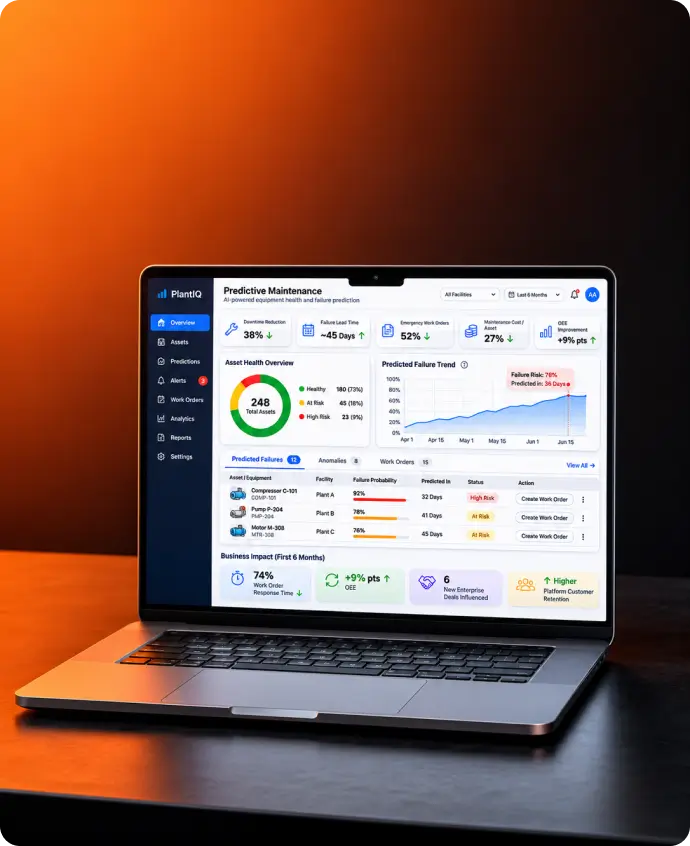
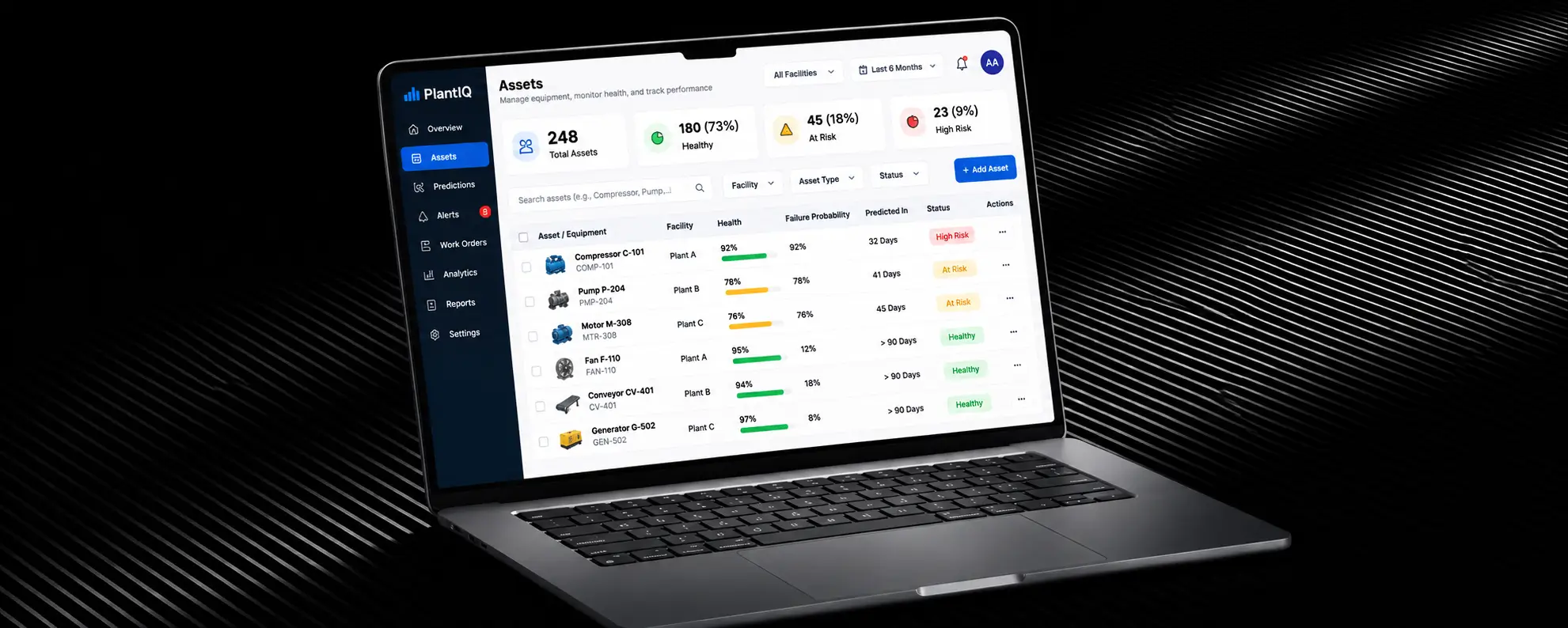
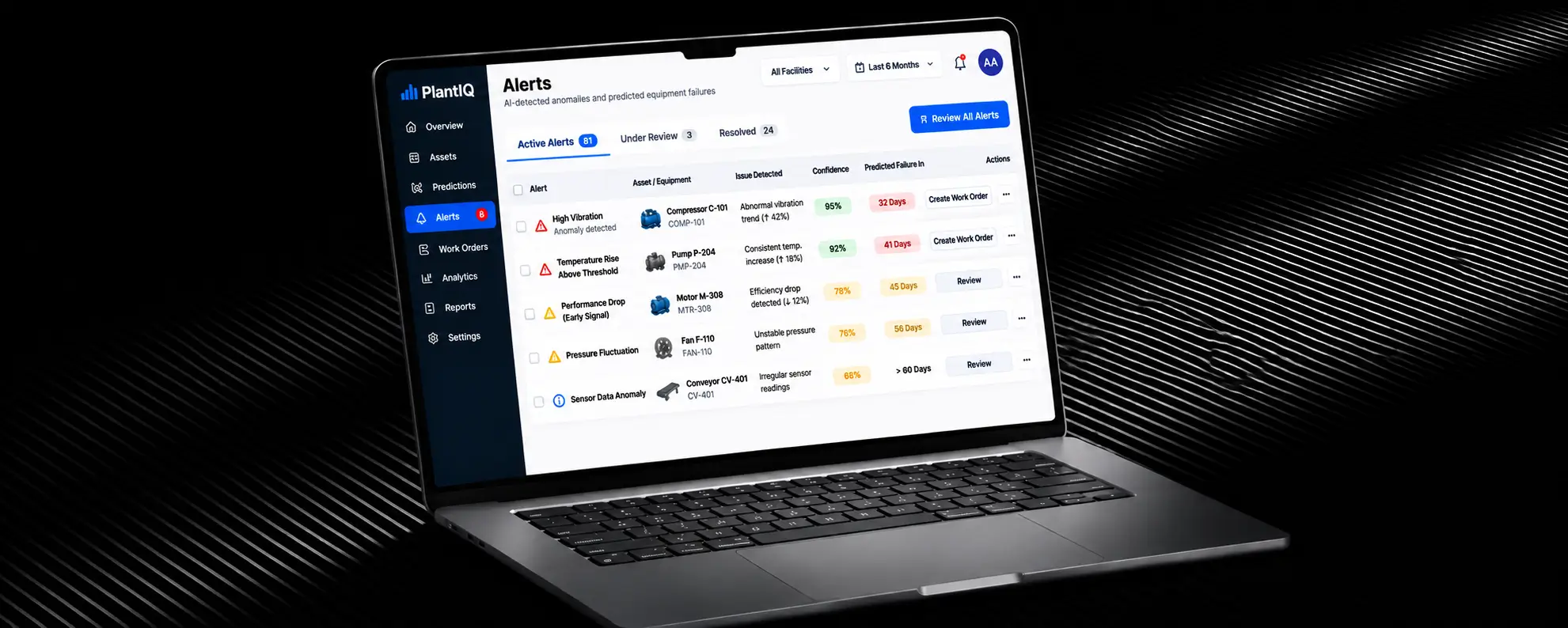
The objective was simple: Turn a system that merely tracked equipment failures into one that could predict them, providing a warning window of 30 to 90 days before the failure of a machine and subsequent stoppage of production.The solution involved a combination of ingestion of IoT sensor data, time-series anomaly detection, failure prediction using machine learning, generating work orders, and seamlessly integrating all these with the existing platform interface.
IoT Data Collection: Sensors Collecting standardized equipment data from all facilities.
Feature Engineering from Time Series Data: Conversion of sensor data into predictive signals for predicting failures and anomalies.
Anomaly Detection & Predictive Maintenance with Machine Learning: Detecting anomalies and predicting failures in real-time 30 to 60 days prior.
Human in Loop for Alert Review: Automated high confidence alerts with alerts to engineers in case of low confidence.
Technology Stack Used
The system was developed following a Python-centric, cloud-native architecture suitable for industrial quantities of data, latencies, and integration with an existing SaaS product.
Apache Kafka
Managed high-throughput, fault-tolerant ingestion of real-time IoT sensor streams from multi-plant, multi-protocol industrial environments.
InfluxDB (Time-Series DB)
High frequency data from sensors including vibrations, temperature, currents, and pressures were stored and queried, optimized for time series workloads.
PostgreSQL
Stored structured alert records, work order metadata, model versioning history, and the full audit trail of predictions and resolutions.
Docker + Kubernetes
Ensured that all microservices were containerized and orchestrated for reliable deployment and horizontal scalability based on varying load from sensors.
CI/CD Pipelines (GitHub Actions)
Facilitated automatic building, testing, model validation, and deployment of models, allowing for iterations in improving the models without manually releasing them.
Python (FastAPI)
Built high-performance APIs powering sensor data ingestion, ML model inference, alert generation, and CMMS work order integration.
MQTT / OPC-UA / Modbus Adapters
Provided the ability for connections to plant floor devices and industrial sensors in varying hardware and communications protocol environments.
Isolation Forest + XGBoost
The Isolation Forest offered real-time unsupervised anomaly detection; the XGBoost classifier predicted the probability of failure as well as remaining useful life for assets with historic failure data.
PyTest
Guaranteed reliability by performing automatic unit testing, integration testing, and model regression testing.
Immediate Business Impact
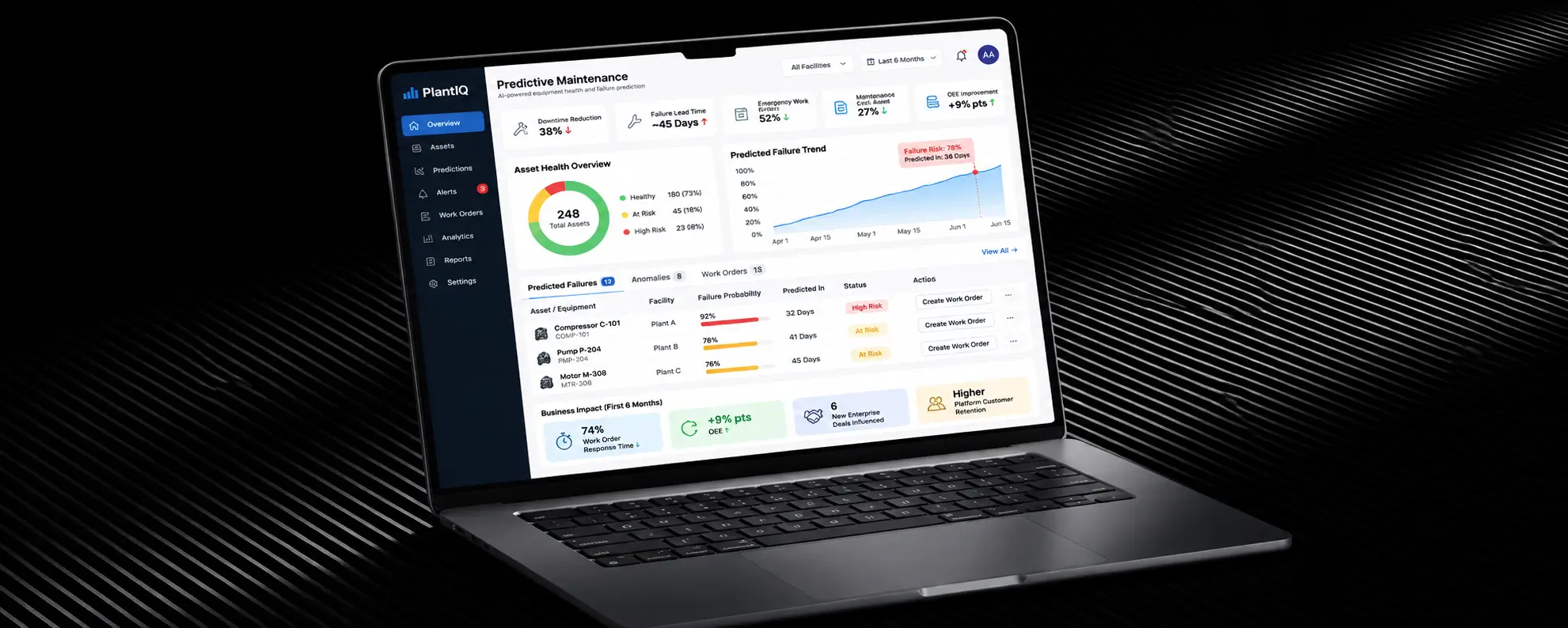
Within months of deploying the embedded predictive maintenance capability, the client’s platform delivered measurable improvements across asset reliability, maintenance efficiency, and operational input for their manufacturing customers.
- Unplanned Equipment Downtime
- Reduced by 38% across monitored assets in the first 6 months of deployment
- Average Failure Detection Lead Time
- Extended 21 to 45 days of advance failure warning.
- Emergency Work Order Rate
- Decreased by 52%, as predicted interventions replaced reactive emergency callouts
- Maintenance Cost per Asset
- Reduced by 27% through predictive maintenance.
- OEE (Overall Equipment Effectiveness)
- Improved by an average of 9% points across customer plants using the predictive module
- Platform Customer Retention
- Improved as predictive maintenance drove customer renewals.
- Work Order Response Time
- Cut by 74% through automated work order generation.
- New Enterprise Deals Influenced
- Influenced 6 new enterprise contracts in the first quarter.
Ready to Add Predictive Intelligence to Your Platform?
Turn IoT and machine data into actionable insights that help your customers predict failures, reduce downtime, and improve operations.