Generative AI Development

From model selection and RAG architecture to integration and deployment, Infojini turns GenAI use cases into software your teams can rely on.

Talk to an AI Expert

An LLM Is the Easy Part. Making It Reliable Inside Your Business Isn't.

A powerful model does not automatically give you a useful Generative AI application.

The harder work is grounding it in the right data, connecting it to existing systems, and controlling what happens when the output is incomplete, inaccurate, or wrong.

Infojini, a trusted Generative AI development company, provides Generative AI development services across architecture, RAG, application engineering, integration, and production controls, so GenAI is built around a real business job, not a technology experiment.

Build the GenAI Capability Your Teams Will Actually Use

Whether you are adding AI to an existing product or building a new GenAI application, our custom Generative AI development services help you engineer the surrounding system as carefully as the model itself.

Generative AI Application Development

Build GenAI applications around specific users, workflows, and business requirements. We handle application architecture, model integration, APIs, interfaces, data access, testing, and deployment.

RAG & Enterprise Knowledge Systems

Give LLMs controlled access to your documents, databases, knowledge repositories, and other approved sources. We build retrieval pipelines that improve relevance and make responses more grounded in your business information.

LLM Integration & Fine-Tuning

Use commercial or open models without forcing your use case into the wrong architecture. We assess model fit, prompting, context requirements, fine-tuning needs, performance, and cost before deciding how far customization should go.

GenAI Copilots & Assistants

Build role-specific assistants for employees, customers, analysts, developers, service teams, or other users. Connect them to the systems and information required to answer questions and complete work in context.

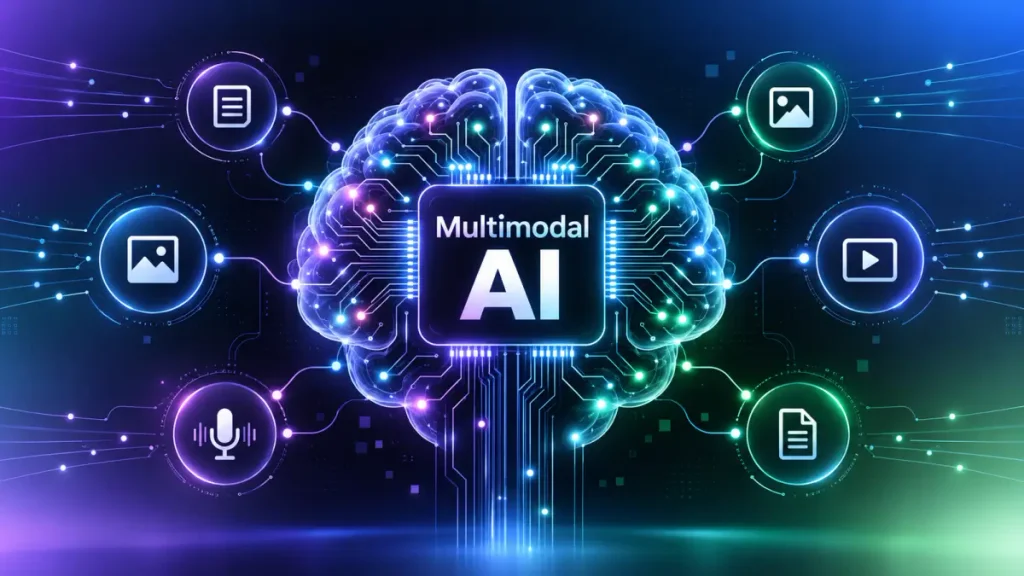
Multimodal Generative AI

Develop applications that work across text, documents, images, audio, and other content formats where the use case requires more than a text interface.

GenAI Integration & Production Optimization

Connect GenAI capabilities with existing applications, APIs, cloud platforms, databases, CRMs, and enterprise systems. After launch, monitor accuracy, latency, usage, model performance, and inference cost as demand changes.

Where Generative AI Fits

Generative AI is most useful where teams spend too much time finding information, creating content, processing documents, or working across disconnected systems

Turn documents, policies, product information, support content, and internal knowledge into conversational search and Q&A experiences.

Build support assistants that understand context, retrieve approved information, draft responses, summarize conversations, and route complex issues to people.

Create GenAI systems that use approved product, audience, campaign, and brand information to support research, content development, personalization, and campaign operations.

Summarize account information, surface relevant signals, prepare meeting briefs, generate contextual responses, and reduce manual research across fragmented systems.

Extract, summarize, classify, compare, and generate information from contracts, reports, forms, submissions, technical documents, and other unstructured content.

Introduce natural-language search, summarization, recommendations, content generation, conversational interfaces, or AI-assisted workflows without rebuilding the entire product.

Have a GenAI Use Case in Mind?

Start with the business problem and the workflow. We’ll help you determine whether GenAI is the right fit and what the architecture should look like.

How We Take GenAI from Use Case to Production

We start with the business job, then design, build, integrate, and optimize the GenAI system around it.

Define the Job

Define the Job

Start with the user, workflow, expected output, available data, risk, and business value. If GenAI is not the right answer, architecture should not pretend otherwise.

Ground the System

Ground the System

Identify the data, knowledge sources, permissions, retrieval architecture, model options, and guardrails required to generate useful responses.

Build & Test

Build & Test

Develop the application, prompts, retrieval pipelines, interfaces, APIs, and evaluation framework. Test against real scenarios rather than ideal prompts.

Integrate

Integrate

Connect the GenAI system with the applications, databases, cloud platforms, and workflows where users already work.

Optimize in Production

Optimize in Production

Track response quality, latency, usage, failure patterns, model changes, and cost. Improve the system as the workload and user behavior evolve.

Generative AI Applied to Real Operational Problems

Retail

Retail Brand Scaled Customer Support with AI Automation

An emerging DTC retail brand specializing in fashion and lifestyle offerings that uses its own online store and third-party e-commerce platforms in the United States. It caters to more than 500,000 consumers where orders occur mainly during seasonal promotions and product launches.

61% Ticket Deflection
14 hrs → 3 minutes First Response Time
58% Cost per Ticket
Technology Stack
OpenAI GPT-4o LangChain + LangGraph Pinecone

Read the Case Study
Retail Brand Scaled Customer Support with AI Automation
Finance

How Intelligent Document Processing Streamlined FinTech Loan Approvals

A rapidly growing FinTech lending company in the USA offering digital personal and small business loans. Along with an increase in the applications, there was an increase in documentation associated with it such as bank statements, tax documents, paychecks, identity papers, and other financial papers which needed to be manually verified before underwriting.

72% Document Processing Time
72 hrs → <20 hrs Loan Approval Turnaround
81% Manual Data Entry
Technology Stack
Azure Document Intelligence OpenAI GPT-4o LangChain
Read the Case Study
How Intelligent Document Processing Streamlined FinTech Loan Approvals
Manufacturing

Building an AI-Powered Predictive Maintenance Platform for a Manufacturing ISV

Rapidly growing Manufacturing Operations Independent Software Vendor (ISV) in the USA that offers plant performance and asset management software to mid-size discrete and process manufacturers.

38% Downtime Reduced
21 Days -> 45 days Warning Detection Time
52% Emergency Work Orders
Technology Stack
Python FastAPI Apache Kafka InfluxDB

Read the Case Study
Building an AI-Powered Predictive Maintenance Platform for a Manufacturing ISV

The Generative AI Stack Behind Production-Ready Applications

We work across the frameworks, data layers, cloud platforms, and deployment tools used to build, integrate, and run GenAI applications in production.

Programming & Application Layer

  • Python
  • FastAPI
  • REST APIs
  • Microservices

GenAI Frameworks & Orchestration

  • LangChain
  • LlamaIndex
  • Hugging Face

RAG & Vector Infrastructure

  • Pinecone
  • Weaviate
  • pgvector
  • Elasticsearch

Data Platforms & Databases

  • Snowflake
  • Databricks
  • PostgreSQL

Cloud & AI Platforms

  • Azure AI Foundry
  • Amazon Bedrock
  • Google Vertex AI

Deployment, Evaluation & Monitoring

  • MLflow
  • LangSmith
  • CI/CD
  • Model Monitoring
  • Evaluation Frameworks

Build the Stack Around the Use Case, Not the Technology

We help you choose the right combination of models, frameworks, data infrastructure, and deployment tools for the application you are building.

Why Choose Infojini as a Generative AI Development Company

Infojini combines AI development with the application engineering, data, cloud, integration, and security capability required to put Generative AI into production.

Deep AI Expertise

Deep AI Expertise

Work with teams experienced across Generative AI, machine learning, application engineering, data, cloud, and enterprise integration.

Faster Development

Faster Development

Move viable GenAI ideas into working applications faster with proven engineering frameworks, reusable components, and an implementation-first approach.

Solutions Built Around Your Needs

Solutions Built Around Your Needs

We design around your use case, workflows, existing systems, data, and business requirements rather than forcing a standard solution.

Security by Design

Security by Design

Data protection, access controls, governance, and compliance requirements are considered from the start of the engagement.

Full-Stack Engineering Capability

Full-Stack Engineering Capability

Bring AI, application development, data engineering, cloud, APIs, and integration together under one delivery team.

Ongoing Support

Ongoing Support

Continue improving performance, reliability, cost, and model behavior as usage grows and requirements change.

Our Technology Partners

What Clients Value About Working with Infojini

“Infojini helped us move from an early GenAI concept to a working solution connected to our existing data and applications. Their team brought structure to the architecture and kept the focus on what users actually needed.”

Michael Carter

Michael Carter

VP of Technology | Healthcare

“Our team here understood that the challenge was not simply choosing an LLM. They worked through data access, integration, security, and application requirements before taking the solution into production.”

Rachel Bennett

Rachel Bennett

Director of AI & Data Platforms | Financial Services

“Infojini helped us turn a fragmented knowledge base into a more usable AI-powered experience for our teams. The implementation was practical, well integrated, and designed around the way people already worked.”

Jason Miller

Jason Miller

Chief Product Officer | Technology

Awards & Recognition 

Top App Development Companies 2018
ISO 27001 Certified
ISO 9001:2008 Certified
ISO 20000 Certified
ITFirms Top Development Company 2018
GoodFirms Top Mobile App Developers
GoodFirms Top Web Development Company
Fast 50 Washington Technology
USPAACC Fast 100 Asian American Business
CMMI Level 3 certification
SIA 2025 Best Staffing Firms to Work For
The Joint Commission National Quality Approval

Frequently Asked Questions

Custom Generative AI development services can include use-case assessment, application architecture, LLM integration, RAG development, model customization, prompt engineering, data integration, application development, testing, deployment, monitoring, and optimization.

The scope should follow what the application needs to accomplish, not a predetermined AI stack.

Look beyond model expertise. A Generative AI development company should be able to assess the use case, work with your existing data and applications, design the architecture, handle integration and security requirements, and take the solution into production.

The ability to move from consulting into engineering and implementation is especially important for enterprise projects.

It depends on the use case. RAG is often appropriate when the application needs access to current or proprietary knowledge. Fine-tuning may help when more consistent domain-specific behavior or output is required.

Training a specialized model brings different data, infrastructure, cost, and operational requirements, so the architecture should be decided after the use case is assessed.

Data protection starts with architecture and model selection. The team should assess what data the model needs, where it is stored, how it is retrieved, who can access it, and what third-party services may receive it.

Controls may include role-based access, encryption, authentication, data isolation, retrieval boundaries, and private or controlled deployment options.

The best Generative AI development company for your project is the one that can work with your current technology environment, understand the business use case, manage data and integration requirements, and take responsibility beyond the prototype.

Also look at engineering depth, security and governance capability, production experience, technology partnerships, and the ability to support the system after launch.

Stay Updated with the Latest Generative AI Insights

What Are You Trying to Build with Generative AI?

Share the use case, systems involved, and where the project stands today. Our AI team will help you identify the technical dependencies and a practical route to production.

    Fields marked with asterisk (*) are mandatory.

    Service Form
    ✖
    Contact Form Career enrollment Hire Talent